Rest did not fix it. A cortisone shot bought a few good weeks, then it came back. You have tried the stretching, the new shoes, the anti-inflammatories, and the heel or the elbow still flares every time you push off, serve, or pick up the pace.
Shockwave therapy is built for exactly this: the stubborn tendon and fascia problems that have stopped responding to the usual things and are quietly costing you your season.
At Physical Therapy Doc in West Boca Raton, Dr. Vlad Madorsky uses it the way the evidence says it works best. That means matched to the right problem and paired with real strength work, never sold as a magic wand.
What Shockwave Therapy Is and Where It Came From
Shockwave therapy, also called extracorporeal shockwave therapy (ESWT), sends focused pulses of acoustic energy, essentially high-powered sound waves, through the skin and into an injured tendon, fascia, or bone. Those pulses are strong enough for your cells to notice, which restarts a healing response in tissue that had stalled out.
It is not a wellness gadget. The technology started in 1980 breaking up kidney stones without surgery, and it has been used on millions of people since.
Doctors noticed the waves were also triggering healing in the tissue they passed through, and by the 1990s the same technology was being aimed at stubborn tendons and bones. Today it is standard in sports medicine clinics worldwide, and FDA-cleared here for plantar fasciitis and tennis elbow.
Focused vs radial shockwave: which is better?
“Shockwave” covers two kinds of machines. Most clinics carry a compact handheld unit called radial shockwave, and for shallow spots like the outside of the elbow it does fine.
But the published results came from full clinical doses, about three sessions a week apart at the strongest energy you can comfortably handle. And some targets, a deep hamstring tendon or a calcified shoulder, need power and depth a handheld unit cannot reach. In the one trial that followed both machines for a full year, they looked identical for six months, then focused pulled ahead and stayed ahead.
That is why the machine here is Chattanooga’s clinical-grade focused system: it delivers the dose the research results were built on, to targets a surface wave never reaches.
How Shockwave Therapy Works
Acoustic pulses pass into the tissue, a controlled mechanical stress your cells detect and react to.
Cells release growth factors and new blood vessels form, feeding a stubborn injury that had a poor blood supply.
Collagen repairs and reorganizes while pain signaling drops, which is why relief keeps building for weeks.
The key thing to understand is that shockwave does not force anything. It delivers a mechanical signal, and your own cells do the repair. A stubborn tendon injury is often “quiet,” stuck in a degraded state with a poor blood supply, which is a big part of why it heals so slowly on its own. The pulses wake it back up.
Common Assumption
If it didn't help right away, it isn't working.
What the Research Shows
Shockwave starts a repair process, not an instant fix. Trials measure the real result at 3 to 4 months, and the gains often keep building out to 6 and 12.
No mystery and no overselling: the window shockwave opens is a biological one, and what you do inside it, the strength work that keeps rebuilding the tendon, is what makes the change last.
The Conditions Shockwave Treats Best
Strong evidence
Not every ache responds to shockwave. Where it genuinely shines is chronic tendon and fascia pain, and for a few problems the evidence is strong and specific.
A few problems stand out:
- Plantar fasciitis. The strongest evidence of any use. Head to head, shockwave beats a cortisone injection by 3 to 6 months, and the gap keeps widening while cortisone fades.
- Calcific shoulder. One of the strongest results in the whole literature. High-energy shockwave can actually break down the calcium deposit in the rotator cuff, and it is reasonable to try before considering surgery.
- Tennis elbow. Across dozens of trials, shockwave came out the best option for getting grip strength back, and it beats the cortisone shots that are no longer recommended for this.
- High hamstring and lateral hip tendons. Strong results in athletes, especially when the shockwave is built into a real strengthening plan: in the strictest kind of trial, shockwave plus exercise succeeded for 87 out of 100 people with lateral hip pain.
- Achilles tendinopathy, done right. The full honest story, including why some reviews say shockwave does not work here, is further down this page.
One pattern runs through every trial above: the results that last come from shockwave with real strength work behind it, not shockwave by itself. Dr. Vlad will recommend that pairing because that is where the evidence is strongest.
If you would rather just do the shockwave, that is your call and he will still treat you, but he will tell you straight what gets the best outcome.
Inside a Shockwave Session
A session runs in a set order, because each step earns the next:
- Confirm the target. Dr. Vlad pins down the tendon or fascia actually driving the problem, and rules out a tear before anything else.
- Match the wave to the target. Depth and energy get tuned to the tissue, so a shallow plantar fascia and a deep hamstring tendon each receive the right dose, at clinical power rather than what a home massage gun puts out.
- Deliver the pulses. About 5 to 10 minutes of treatment, no numbing, dialed to the strongest level you can comfortably handle. The no-numbing part is intentional, since anesthetic blunts the healing response.
- Pair it with the work. Hands-on manual therapy and progressive strength work as part of your sports rehab, so the tendon rebuilds while the window is open.
Here is the part that matters most if you are mid-season: you can usually keep training through a shockwave course. That is a real edge over a cortisone shot, which often benches you for weeks. Dr. Vlad may dial your intensity back for a stretch, but you keep playing.
How the Results Build Over Time
This is the part fast-relief promises skip: shockwave restarts a repair process, and repair takes time. Here is the honest trajectory:
Figure 1
The results that last come from doing it right: it can help on its own, but the gains that hold are the ones backed by a real strengthening plan.
Shockwave Therapy vs a Cortisone Shot
For stubborn tendon problems like plantar fasciitis, lateral hip pain, and tennis elbow, a cortisone shot is the usual next step. Here is how the two stack up:
Table 1
Shockwave
A cortisone shot
Builds over weeks, then holds
Fast, then fades
Repairs the tendon
Can weaken it over time
Train through it
Benched for weeks
A fix that lasts
Fast, short-term relief
Table 1. Cortisone can win the first few weeks. Shockwave is slower but keeps climbing, pulls ahead by 3 months, and it will not weaken the tendon the way repeat shots can.
Who Shockwave Helps Most, and Who Should Wait
Shockwave is a strong fit when a stubborn, chronic tendon or fascia problem has stopped responding to the basics. The best candidates tend to be:
- People whose pain has hung around 3 months or more and has not budged with rest, activity changes, and basic rehab
- Tennis, pickleball, golf, running, and CrossFit athletes who want to keep training through treatment instead of sitting out
- Anyone looking for an alternative to another cortisone shot
- People with calcific shoulder, where shockwave can dissolve the deposit, or anyone hoping to avoid or delay surgery and its post-surgery rehab
Just as important is being honest about who should hold off. Dr. Vlad will steer you toward a different plan first if you:
- Have brand-new pain, under about 6 weeks, which usually needs load management first, not shockwave
- Are on a fluoroquinolone antibiotic, which weakens tendon tissue
- Have had a recent cortisone injection into the same spot
- Have signs of an actual tendon tear, which needs imaging and a different approach
- Are pregnant, take blood thinners, or have a bleeding disorder
One more fork worth knowing: shockwave treats the tendon itself. When the real driver is a tight, overworked muscle pulling on that tendon, dry needling is often the better first tool, and some plans use both. Dr. Vlad will tell you which your case calls for.
The Achilles, Done Right
Achilles tendon pain is the spot where knowing how to use shockwave matters most. Used as an accelerator on a progressive strengthening program, about 8 in 10 people report full or marked recovery, versus about half when the shockwave is done alone. And 2026 ultrasound imaging shows it physically speeds the tendon’s repair, best when the pain is caught inside the first year.
You may have read that shockwave does not work for the Achilles. Averaged across all the old studies, that is roughly true, and here is why: most of them zapped worn-out tendons and sent people home with no strengthening plan.
The tool was never the problem; how it was used was. Dr. Vlad treats the Achilles that fits, at the right stage with the right plan, and tells you straight when yours is better served another way.
The safety record is reassuring. Across nearly 2,500 people and more than 6,400 sessions, researchers found only 2 complications, neither caused by the shockwave itself. What you can realistically expect is mild: some redness at the site, and next-day soreness in the treated spot that fades within a day or two.
Where the Research Is Heading
Emerging evidence
Beyond the established uses, shockwave is being studied in areas most clinics have not caught up to yet. Some of it is genuinely promising, some is still early, and each item below says which.
- Acute muscle injuries. A 2025 trial in semi-pro athletes with hamstring strains found that adding shockwave to a rehab program cut return-to-sport time by about 3 days. More importantly, the shockwave group was the only one that came back without lingering weakness in the injured leg. One solid trial plus strong lab work, promising but not settled.
- Bone marrow edema. A deep, painful bone bruise that sidelines active people. A controlled trial found shockwave cleared it on MRI in most people within 6 months, better than medication. Underused, and worth knowing about.
- Shockwave plus PRP. Early trials combining shockwave with platelet-rich plasma injections show promise for tennis elbow and slow-healing bone, on the idea that one primes the tissue and the other delivers growth factors. Biologically sensible, still early.
Dr. Vlad watches this literature closely. When one of these uses earns evidence strong enough to stand behind, he will tell you straight, and it will show up here before it shows up on most clinic menus.
Shockwave Therapy in West Boca Raton
You will find Physical Therapy Doc inside Costa Performance gym in West Boca Raton, where Dr. Vlad treats tennis, pickleball, golf, running, and CrossFit athletes one-on-one, from first assessment back to full sport.
Florida allows direct access to physical therapy, so no physician referral is needed to start.
And the timing genuinely matters here: a tendon problem that gets treated months in responds better than one that has been worked around for years. For the Achilles, the data says results are best inside the first year. If a stubborn tendon keeps cutting into your sport, book a free call and find out where you stand.
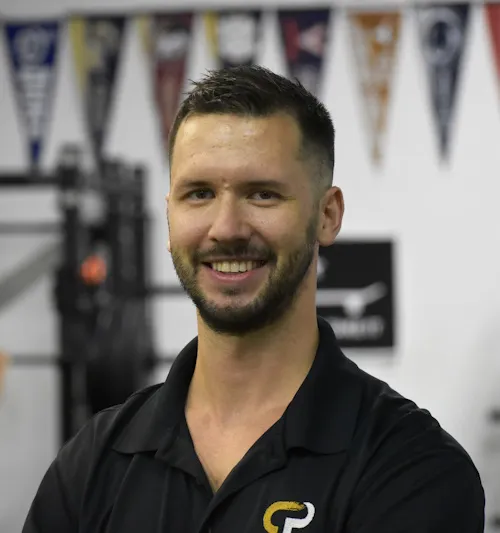
Who you work with
Every session is one-on-one with Dr. Vlad
Physical Therapy Doc is a one-clinician practice. Every evaluation, treatment, and training session is done by Dr. Vlad himself.
- DPT and CSCS. A doctor of physical therapy and a certified strength coach in one, so the person treating the injury is also qualified to load you back to full performance. Fewer than 4% of physical therapists hold both credentials.
- One-on-one, every session. The same clinician who assessed you treats you, start to finish. No aides, no handoffs.
- Inside Costa Performance. A performance training gym in West Boca Raton, with everything needed to go from the treatment table back to full training.
Where to find us
Serving West Boca Raton and surrounding communities
Physical Therapy Doc is located inside Costa Performance gym at 10018 Spanish Isles Blvd, Suite A52, between Clint Moore and Yamato, just off US-441.
Athletes and active adults come to us from St. Andrews, Broken Sound, Seven Bridges, and the tennis, golf, and pickleball communities across West Boca, Delray Beach, and Boynton Beach. They come for one-on-one care the standard clinic model does not offer.
Frequently asked questions
Does shockwave therapy hurt?
You feel a firm, rhythmic tapping against the skin. Most people rate it around a 3 to 5 out of 10, uncomfortable but very manageable, and Dr. Vlad turns the intensity up or down based on what you feel.
One thing that surprises people: he will not numb the area first. That is on purpose. Research shows that numbing the spot actually blocks the healing response, so a little discomfort during the session is part of what makes it work. Afterward the area can feel sore, the way a muscle does after a hard training day, and that settles within a day or two.
How much does shockwave therapy cost, and do you take insurance?
Physical Therapy Doc is self-pay: no insurance billing, no surprise bill weeks later, and FSA and HSA cards work here. Shockwave is delivered inside your one-on-one time with Dr. Vlad, not billed as a faceless add-on.
Here is the honest math: your money buys a full hour where a doctor of physical therapy does the assessment, the treatment, and the exercise himself, on a plan aimed at your return to sport instead of at what an insurance plan will approve. On the free call Dr. Vlad will walk you through what a course for your tendon would look like and give you the exact numbers.
How many shockwave sessions will I need?
The most studied protocol is 3 sessions, about one a week, and some stubborn cases run to 4 to 6.
What matters as much as the count is what happens around it. Shockwave starts a repair process that keeps working for weeks after the last session, and pairing it with the right strength work is what makes the change hold. And if you are not responding by the end of the planned course, Dr. Vlad reads that as an answer in itself and switches approaches instead of selling you more of the same.
How soon will I feel results?
Shockwave is not an instant fix, and anyone who promises that is overselling it. It kick-starts your body's own repair, which takes time.
Some people feel a little better within the first couple of weeks, but the meaningful change usually shows up between weeks 4 and 8, and it keeps building through 3 to 6 months. That slow-then-lasting curve is why researchers measure the real result at 3 to 4 months, not the day after treatment.
Is shockwave better than a cortisone shot?
For several stubborn tendon problems, the honest answer is yes, over time. Cortisone often feels great in the first few weeks and then fades, and for tennis elbow it is no longer recommended because the long-term results are poor.
Shockwave works the other way around: slower to build, but the results last, and it does not carry cortisone's risk of weakening the tendon. The other big difference for an athlete is that you can usually keep training through a shockwave course, while a cortisone shot often means shutting down for weeks.
Is shockwave therapy worth it?
For the right problem, yes. If a tendon or fascia problem has hung around 3 months or more and stopped responding to rest and basic rehab, shockwave carries some of the strongest evidence of any non-surgical option, and you can usually keep training through the course.
It is not worth it as an instant fix, because the results build over weeks, not days.
The honest math: about 3 sessions, meaningful change landing between weeks 4 and 8, and gains that hold when the treatment is paired with real strength work. If your problem is not a fit, Dr. Vlad will tell you that on the free call before you spend anything.
Who should not get shockwave therapy?
Shockwave has a strong safety record, but some situations mean Dr. Vlad starts elsewhere, and he checks for every one of them before treating. Tell him if you are pregnant, take blood thinners or have a bleeding disorder, are on a fluoroquinolone antibiotic (like ciprofloxacin), or have had a recent cortisone injection into the same spot.
If there is any sign the tendon is torn rather than just irritated, he will confirm that with imaging before treating, since shockwave is for a stressed tendon, not a ruptured one.
Not sure if this is the right fit?
Book a free phone consultation with Dr. Vlad. Tell him what is going on, and he will tell you honestly whether he can help and what that would involve.
Book a Free Phone ConsultationFree 15 min call with Dr. Vlad Madorsky, PT, DPT, CSCS