A torn ACL comes with a strange kind of clarity. There is usually a pop, the knee swells fast, and by the time the MRI confirms it, most athletes already know two things: surgery is probably happening, and the road back is long.
This page is for that road back. Not the operation itself, which belongs to your surgeon, but everything around it that decides how the story ends: the shape you’re in prior to surgery, the way the months after are spent, and the testing that says when you are truly ready to play again.
What an ACL Tear Means for Your Knee
The ACL is the ligament in the center of the knee that keeps the shin bone from sliding and rotating out from under the thigh bone. Most tears happen without any contact at all: a plant and pivot, an awkward landing, a twist on skis. The pop, fast swelling, and a knee that no longer feels trustworthy are the classic signs.
A couple of things are useful to know at diagnosis. The exam usually identifies a torn ACL before the MRI does; the scan’s main job is finding what else got hurt. And ACL tears rarely happen alone: the meniscus is injured alongside in a large share of cases, and that combination shapes the surgical plan.
Before Surgery: Why Prehab Changes the Outcome
The weeks between injury and surgery look like dead time. They are the opposite.
Rehab before reconstruction, called prehab, means walking into the operating room with the swelling gone, the knee fully straightening, and the quad still strong. The research on it is encouraging:
The logic is simple. Surgery sets every knee back from wherever it starts, and the stronger the knee going in, the stronger it comes out. Dr. Vlad takes athletes through this window, and it is some of the highest-value work in the whole recovery.
If your surgery date is already on the calendar, this window is open right now, and it closes on the day of the operation. Even two focused weeks change what you bring into the operating room.
The Recovery Timeline After ACL Surgery
Good ACL rehab moves through stages, and each stage has a bar to clear before the next one starts. Here is how the stages typically run:
Table 1
| Phase | The job | The bar to clear |
|---|---|---|
| Weeks 0 to 6 | Calm the knee, get it fully straight, wake the quad up | Full extension, quiet swelling, quad firing |
| Weeks 7 to 16 | Rebuild strength and normal walking, then jogging mechanics | Quad approaching 70 to 80 percent of the other leg |
| Months 4 to 6 | Running, heavier strength work, early agility | Around 80 percent strength symmetry, clean movement |
| Months 6 to 9+ | Cutting, jumping, sport drills, testing | Strength and hop tests near 90 percent, confidence in the knee |
| Months 9 to 12 | Return to sport, then keep training | Passed testing, staged return to full play |
Notice that the calendar and the bars can disagree. A knee can arrive at month nine on schedule and still be nowhere near the strength numbers. The next two sections cover what to do about that.
Return to Sport After ACL Surgery: The Real Numbers
Here is how ACL recoveries end up for everyone who has this surgery. Most athletes get back to some form of sport. Only about six in ten get back to their previous level, and roughly half make it back to competitive play.
Around 6 percent of reconstructed knees tear again, and the opposite knee gets hurt almost as often. Taken together, about 1 in 5 athletes ends up with a second ACL injury, and young athletes in pivoting sports run higher still. The most common reason athletes never make it back is not the knee; it is fear of reinjuring it.
Those numbers sound discouraging until you ask how those recoveries were run. The answer, mostly, is: by the calendar.
Read those three together and the population numbers stop predicting your outcome. The averages describe athletes cleared by time. The good outcomes concentrate in athletes cleared by testing. Which group you end up in is largely a choice.
Why Return-to-Sport Testing Matters
Common Assumption
Nine months have passed and the surgeon signed off, so my knee is ready for sport.
What the Research Shows
Nine months is the floor, not the finish line. The knees that stay healthy are the ones that also pass strength, hop, and confidence testing. Time plus tests, never time alone.
What testing actually means for an ACL knee:
- Strength, measured, not eyeballed. The surgical leg against the other one on real equipment. A hop test can look fine while one quad is still much weaker, and only a strength test catches that
- Hop and landing testing. Single hops, triple hops, landing mechanics, with the surgical side performing close to the other leg
- Confidence in the knee. Measured with a short questionnaire built for this purpose, and it turns out to be one of the strongest predictors of who successfully returns. A knee you do not trust changes how you move
- Both legs. The opposite knee carries nearly the same second-injury risk, so the rebuild trains and tests both sides
Dr. Vlad has seen this problem in the clinic. A basketball player in his mid-30s came in a year after finishing rehab somewhere else. It was his second ACL tear. He still had knee pain, he was still weak, and he could not do the jump tests. In a full year, nobody had ever tested his strength. Cases like his are common, and they are the reason the testing exists.
How Dr. Vlad Handles ACL Rehab
ACL rehab is a focus of the practice, and Dr. Vlad takes the whole span of it. That means prehab before the operation, early post-op rehab in the first weeks after surgery, the long middle where strength gets rebuilt through sports rehab, and the testing that ends it. Each visit is one private hour with him, inside a real gym.
In the first few weeks after surgery, the work follows your surgeon’s protocol, with Dr. Vlad and your surgeon in contact as each bar gets cleared: full extension, swelling management, and a quad that fires. The tools match the phases:
- Early: when the knee cannot take heavy weight, BFR training rebuilds the quad with light loads
- The long middle: squat racks, plyometric space, and room to retrain cutting and landing, not a clinic hallway
- The finish: testing on force plates that measure how hard each leg pushes and lands, a handheld strength gauge for the quad, and a full series of hop tests
He also takes the hard cases that arrive late. A teenage soccer goalie came to him seven months after her reconstruction, still unable to fully straighten the knee and with almost no strength built in all that time. The rehab she had been getting was not doing the job: her knee extension was not being restored or watched closely enough, scar tissue formed in the joint, and it took a second procedure to remove it.
After that procedure, he rebuilt her to where she could pass her return-to-sport measures, and her strength is still climbing. The lesson from her case is simple: the quality of the rehab matters as much as the surgery. Seven months of rehab that does not push or measure the knee can cost an athlete a second operation.
For the complete, structured version of this from surgery day to tested return, the ACL rehab program is the practice’s flagship.
Recovering From an ACL Tear in West Boca Raton
Physical Therapy Doc is based inside Costa Performance gym in West Boca Raton, rebuilding ACL knees for West Boca’s skiers, tennis and pickleball players, and weekend athletes, from prehab through the final test.
If your surgery is scheduled, the weeks before it count, and the earlier the rehab relationship starts, the better the whole recovery runs. If your surgery was days or weeks ago, the first phase decides how the rest goes, and this is the week to choose where that rehab happens. And if surgery is months behind you and something still is not right, testing will show where the recovery stopped.
Either way, the free 15-minute call is the place to start. Tell Dr. Vlad where your knee is in the process, and he will tell you what the next step should be.
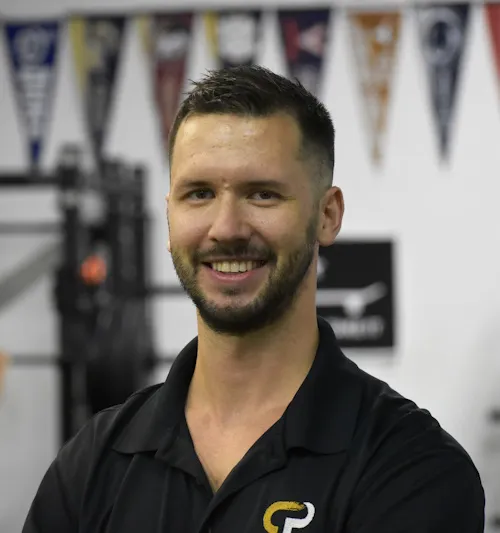
Who you work with
Every session is one-on-one with Dr. Vlad
Physical Therapy Doc is a one-clinician practice. Every evaluation, treatment, and training session is done by Dr. Vlad himself.
- DPT and CSCS. A doctor of physical therapy and a certified strength coach in one, so the person treating the injury is also qualified to load you back to full performance. Fewer than 4% of physical therapists hold both credentials.
- One-on-one, every session. The same clinician who assessed you treats you, start to finish. No aides, no handoffs.
- Inside Costa Performance. A performance training gym in West Boca Raton, with everything needed to go from the treatment table back to full training.
Where to find us
Serving West Boca Raton and surrounding communities
Physical Therapy Doc is located inside Costa Performance gym at 10018 Spanish Isles Blvd, Suite A52, between Clint Moore and Yamato, just off US-441.
Athletes and active adults come to us from St. Andrews, Broken Sound, Seven Bridges, and the tennis, golf, and pickleball communities across West Boca, Delray Beach, and Boynton Beach. They come for one-on-one care the standard clinic model does not offer.
Frequently asked questions
Can an ACL tear heal without surgery?
For some people, rehab without surgery genuinely works. The knees that do best without reconstruction tend to belong to people over 30, with no giving-way episodes, who are not returning to hard pivoting sports. In the trials that tried rehab first with surgery as a backup, about half never needed the operation, and outcomes were similar years later.
The other side matters just as much: an unstable knee that keeps giving way is damaging its meniscus and cartilage while it waits, so that knee belongs with a surgeon sooner rather than later. If you are unsure which knee you have, that is a question worth an evaluation, not a guess.
How much does ACL rehab cost, and do you take insurance?
Physical Therapy Doc is self-pay: no insurance billing, no visit caps deciding when your knee is done, and FSA and HSA funds work.
Every visit is a full one-on-one hour with Dr. Vlad, and an ACL recovery is a long road where the plan matters more than any single session.
Start with the free phone call. Tell Dr. Vlad where you are in the process, and if the evaluation is the right next step, he gives you its exact cost right there, before you commit to anything.
How long after ACL surgery until I can play my sport again?
Plan on nine months to a year for pivoting sports, and treat that as a minimum, not a promise. Research on return timing points the same direction: athletes who go back earlier get hurt again more often, and every month of good rehab up to around nine months lowers the risk.
The date should come from testing, not the calendar: strength compared against your other leg, hop testing, and how much you trust the knee. When the tests are passed, the return is earned.
Which ACL graft is best?
That is your surgeon's call, and each option trades something. Patellar tendon grafts have low re-tear rates but slower quad recovery and kneeling soreness. Hamstring grafts recover faster early but show higher re-tear rates in some younger groups. Quadriceps tendon grafts are newer but holding up well as more surgeons use them. Donor-tissue grafts are usually saved for less demanding knees, and the newer implant that helps the ligament heal itself is promising but has less of a track record.
What matters for this page: the rehab priorities shift with the graft, protecting the spot the graft was taken from early on, and the finish line is the same regardless: a tested, trusted knee.
What is a partial ACL tear?
A tear through part of the ligament rather than all of it, and the word partial can be misleading. What decides the path is not the percentage on the MRI; it is whether the knee is stable when examined and whether it gives way in real life.
A stable partial tear often does well with structured rehab alone. An unstable one behaves like a complete tear, and in young athletes returning to pivoting sports, a meaningful share of partial tears progress to full ruptures. An exam, not the report, sorts which one you have.
Should I do physical therapy before ACL surgery?
Yes, and this is one of the easiest wins in the whole process. Going into surgery with a calm, strong, fully straightening knee measurably improves how you come out of it; the details and numbers are in the prehab section on this page.
Even a couple of focused weeks before your surgery date helps. The time between injury and surgery is usable time.
Why does my knee still feel weak or unsteady a year after ACL surgery?
This is more common than people admit, and it usually is not in your head. When rehab stops early or was never pushed past the jogging stage, big strength deficits stay behind, and the knee tells you every time you try to cut or land.
The fix starts with measurement: testing the leg against the other side shows where the recovery actually stopped. It is not too late to finish the job; strength responds to training at one year the same way it does at three months.
Do I need a referral to start physical therapy in Florida?
No. Florida direct access means you can book a physical therapy evaluation without a physician referral, including before surgery.
For ACL recoveries, Dr. Vlad works in step with your surgeon anyway: your surgeon handles the operation, and rehab decides how well you come back, so both sides talking makes the whole thing go better.
Not sure if this is the right fit?
Book a free phone consultation with Dr. Vlad. Tell him what is going on, and he will tell you honestly whether he can help and what that would involve.
Book a Free Phone ConsultationFree 15 min call with Dr. Vlad Madorsky, PT, DPT, CSCS