Frozen shoulder usually starts small: a shoulder that aches, then hurts at night, then starts losing ordinary reaches one by one: the back seat, fastening a bra, throwing a ball overhead. By the time most people search for answers, the arm has real limits and somebody has told them it just has to run its course.
That advice is only half true, and the half that is wrong costs people years. Frozen shoulder has stages, each stage responds to different care, and matching the treatment to the stage is how the course gets shortened.
What Is Going On Inside a Frozen Shoulder
Every shoulder joint sits inside a capsule, a flexible envelope of tissue that normally has generous slack. In frozen shoulder (the name on your paperwork may say adhesive capsulitis), that capsule becomes inflamed and then thickens and scars, shrinking the joint’s available room. The medical shorthand: inflammation first, stiffening second.
That two-part process explains the condition’s strange behavior. Early on the problem is pain, often out of proportion to anything you did. Later the pain eases and the problem becomes stiffness, a shoulder that simply will not go where you point it. Different phases, different problems, and, as covered below, different treatment.
The Three Stages: Freezing, Frozen, Thawing
Some sources list three stages and some list four; the four-stage version just splits the beginning into two. The three-stage picture covers what matters:
Table 1
| Stage | What it feels like | How long it typically runs |
|---|---|---|
| Freezing | Pain leads. Aching that worsens with movement and at night, while motion gradually shrinks | 6 weeks to 9 months |
| Frozen | Stiffness leads. Pain often eases, but the shoulder is locked well short of normal | 2 to 6 months |
| Thawing | Motion slowly returns as the capsule loosens | 6 months to 2 years |
Does Frozen Shoulder Go Away on Its Own?
This is the question that decides whether people get help or lose years, so it deserves the real numbers.
Common Assumption
Frozen shoulder resolves by itself within one to three years, so treatment just spends money on the same result.
What the Research Shows
Improvement is common, but full recovery is not guaranteed. In the largest trial ever run on this condition, about 40 percent of people still had symptoms four years after it started. Waiting is not a guaranteed finish.
That number comes from the UK FROST trial published in The Lancet, the largest and longest look at this condition to date. Its message: recovery without treatment can be slow, and it often does not finish.
The full picture: most shoulders do improve substantially over time, and this condition is not a catastrophe. The problem with waiting is twofold: many shoulders never fully recover on their own, and even the ones that do can take years to get there. For someone who plays tennis or golf in their 50s, those are prime playing years.
Who Gets Frozen Shoulder
Frozen shoulder targets a specific crowd. It concentrates between ages 40 and 60, hits women about four times as often as men, and clusters around a few risk factors:
- Diabetes. The risk runs several times higher, the condition tends to be more stubborn, and it responds worse to surgical options, which makes early non-surgical treatment matter most for this group
- Thyroid conditions, both overactive and underactive
- The menopause transition. The age-and-sex pattern lines up with it, and hormonal changes in tissue are the suspected link
- A shoulder that stopped moving. After an injury, a surgery, or any long stretch of keeping the arm still, the capsule can begin to tighten
None of these cause frozen shoulder on their own, and plenty of cases arrive with no clear reason at all. The practical point is recognition: a stiffening, night-aching shoulder at this age deserves the frozen shoulder question asked early.
Frozen Shoulder or a Rotator Cuff Tear?
The two get confused constantly, and one examination finding separates them better than anything else: what happens when someone else moves your arm.
With a rotator cuff tear, the motor is damaged but the joint is free; you may not be able to lift the arm yourself, but an examiner usually can. With frozen shoulder, the capsule itself is shrunk, so the arm will not go regardless of who is moving it. Losing the ability to rotate the arm outward is the signature restriction.
Sorting this out is part of the first evaluation, because the two conditions head down entirely different treatment roads.
Treatment That Matches the Stage
Here is the finding that organizes everything else: treatments for frozen shoulder work differently depending on the stage. In a large comparison of treatment combinations across the stages, the winning approach in the painful freezing stage was a cortisone injection paired with physical therapy. In the stiff frozen stage, hands-on joint mobilization moved to the front.
That matches the biology. While the capsule is inflamed, the job is calming pain and keeping motion without provoking the joint; forcing aggressive stretching into that phase tends to intensify pain and can prolong the course. If you have been stretching hard and the shoulder keeps getting angrier, this is why. You did not do it wrong; it is the right work for the wrong stage.
Once the inflammation settles and stiffness leads, the capsule tolerates and needs firmer work: joint mobilization and progressive stretching matched to what the shoulder can handle. Exercise carries solid evidence for restoring motion and function.
The reason to care: getting the stage wrong wastes months. Gentle care during the stiff stage undertreats it; aggressive care during the painful stage backfires. Stage identification is the treatment decision, and it is the first thing an evaluation establishes.
Where Injections and Surgery Fit
The comparison research here is unusually clear, and it favors a specific sequence rather than any one standout treatment:
If a physician offers you one of these, here is the short version. Hydrodilatation, injecting fluid to stretch the capsule from inside, has not shown a meaningful advantage over a standard cortisone injection, so there is no need to hunt one down. Manipulation under anesthesia carries real risks, including fracture, and performs poorly in diabetes, where shoulders sometimes re-freeze afterward. Surgery keeps a legitimate role for the minority of shoulders that stall after a real course of non-surgical treatment.
None of this makes injections a rival to rehab; they work together in a set order. When pain is high, the shot comes first. Then the rehab does the work of restoring motion.
Dr. Vlad works with physicians on this: when a shoulder in the freezing stage needs the injection to make treatment tolerable, he says so, names the right kind of doctor, and coordinates it. You do not need to figure out the injection question on your own. Start with the call, and Dr. Vlad will help you sort out the order.
Getting Through the Nights
For most people the worst part of the freezing stage is not the day; it is 2 a.m. The inflamed capsule aches hardest at night, lying on the shoulder is impossible, and the lost sleep makes everything else harder.
Positioning helps:
- On your back, with the sore arm supported on a pillow so it does not fall backward
- On your good side, hugging a pillow, with the sore arm resting on top
- Never directly on the frozen shoulder
Treatment helps more, and speed is measurable here. In a head-to-head treatment trial, a cortisone injection brought clearly faster improvement in night pain by seven weeks, with the advantage fading by six months as other treatment caught up. And a second trial found the same pattern: faster relief early, a similar place months later.
For a sleep-deprived person, that is the point: treating the freezing stage early is how the bad nights end sooner. The difference between those treatments was not where the shoulder ended up; it was how many bad nights it took to get there.
Playing Tennis and Golf With a Frozen Shoulder
No trials exist on returning to overhead sport with frozen shoulder, so what follows is the stage-based approach experts use, applied to tennis, golf, and pickleball.
- Freezing stage: stay in the game below shoulder height. Putting and chipping usually stay comfortable in golf; groundstrokes and dinking can work in tennis and pickleball. The serve, the smash, and full-power rotational swings are the moves to put on hold while the capsule is inflamed
- Frozen and thawing stages: range gets rebuilt first, then strength in the rotator cuff and shoulder blade muscles. Only then do full swings and serves come back, starting with compact, well-under-full-power versions
- Ready to return when: motion is close to the other side, the sport's movement is pain-free at practice intensity, and the strength is there to control it
To be clear, no study can tell you the date your serve comes back. What a stage-based plan does is keep you playing what your shoulder can handle right now, so you avoid the two common mistakes: quitting sports completely, or forcing the overhead motion and flaring the shoulder up.
How Dr. Vlad Treats Frozen Shoulder
Frozen shoulder care at Physical Therapy Doc is one-on-one with Dr. Vlad for a full hour each visit, built around the stage your shoulder is in. During the freezing stage, the focus is pain relief and protecting the motion you have. Once the stiffness takes over, the work shifts to hands-on joint work and progressively deeper stretching. As the shoulder thaws, corrective exercise rebuilds strength.
That sequence is how he has taken a true frozen shoulder from locked to full range in about three months, fast against the usual course of this condition: a well-timed cortisone injection to take the pain down, then twice-a-week sessions of progressively deeper overhead stretching and shoulder blade stabilization work. It takes real effort, and stretching a frozen capsule is not comfortable. But it works.
The injection makes the pain manageable, and the consistent hands-on work is what gets the motion back. That is the combination the research supports, and it is the combination that delivers in the clinic.
Frozen Shoulder Treatment in West Boca Raton
Physical Therapy Doc treats frozen shoulder from inside Costa Performance gym in West Boca Raton, serving the tennis, golf, and pickleball players of West Boca and the 40-to-60 crowd this condition targets most.
The timing facts are worth restating. Injections help most inside the first year, so if you are only a few months in, you are early, with every option still open. Past the year mark, most shoulders have moved into the stiff stage, where hands-on joint work is the front-line treatment, so a late start changes the plan, not the odds of getting help. Either way, the untreated course is measured in years with no guarantee of a complete finish, and every month of waiting uses up part of the calendar.
Reading this for a spouse whose shoulder is the problem? You can make the call for them too.
The free 15-minute call is the first step: describe what the shoulder is doing and how it started, and Dr. Vlad will listen and tell you the right next step.
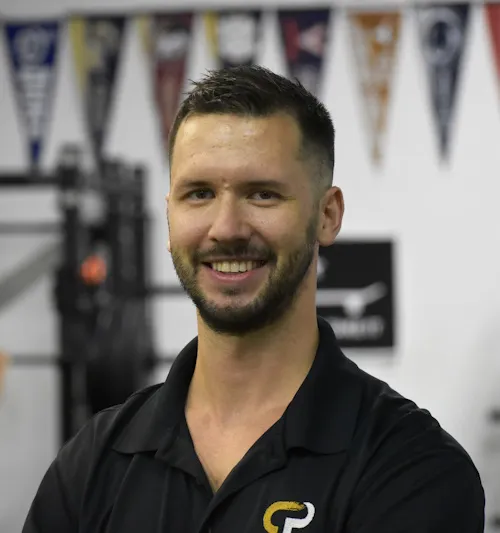
Who you work with
Every session is one-on-one with Dr. Vlad
Physical Therapy Doc is a one-clinician practice. Every evaluation, treatment, and training session is done by Dr. Vlad himself.
- DPT and CSCS. A doctor of physical therapy and a certified strength coach in one, so the person treating the injury is also qualified to load you back to full performance. Fewer than 4% of physical therapists hold both credentials.
- One-on-one, every session. The same clinician who assessed you treats you, start to finish. No aides, no handoffs.
- Inside Costa Performance. A performance training gym in West Boca Raton, with everything needed to go from the treatment table back to full training.
Where to find us
Serving West Boca Raton and surrounding communities
Physical Therapy Doc is located inside Costa Performance gym at 10018 Spanish Isles Blvd, Suite A52, between Clint Moore and Yamato, just off US-441.
Athletes and active adults come to us from St. Andrews, Broken Sound, Seven Bridges, and the tennis, golf, and pickleball communities across West Boca, Delray Beach, and Boynton Beach. They come for one-on-one care the standard clinic model does not offer.
Frequently asked questions
How long does frozen shoulder last?
The commonly quoted course is 18 months to 3 years from start to finish when nothing is done, moving through a painful freezing stage, a stiff frozen stage, and a slow thawing stage.
But the long-term studies show many shoulders never fully finish thawing on their own: years later, a large share still have stiffness or symptoms. Treatment matched to your stage, especially when it starts early, is how the course gets shortened from years toward months.
How much does frozen shoulder treatment cost, and do you take insurance?
Physical Therapy Doc is a self-pay practice: no insurance billing, no visit caps, and FSA and HSA funds are accepted. Every session is a full one-on-one hour with Dr. Vlad.
The starting point is the free phone call. Describe what your shoulder is doing, and if the evaluation is the right next step, Dr. Vlad gives you the cost on that call, with nothing committed until you decide.
Is frozen shoulder related to menopause?
The pattern is hard to ignore: frozen shoulder concentrates in women in their 40s and 50s, roughly four times as often as in men, right across the menopause transition. Researchers suspect estrogen's role in tissue health is part of the link, though the mechanism is not yet proven.
What that means practically: if you are a woman in that window with a shoulder that is getting painful and stiff, frozen shoulder belongs on the list of suspects early, because the earlier it is identified, the more the treatment can change the course.
Why do people with diabetes get frozen shoulder?
Diabetes raises the risk several times over, and thyroid conditions raise it too. The leading explanation involves how blood sugar affects the collagen in the joint capsule.
The more important fact for anyone with diabetes: frozen shoulder tends to run more stubborn with diabetes, and it responds worse to surgical fixes, with some shoulders re-freezing after manipulation. That makes early treatment matched to your stage, without surgery, the most valuable opportunity you have.
Will a cortisone shot fix my frozen shoulder?
It helps most people, with two big caveats: timing and follow-through. Injections work best in roughly the first year of symptoms, typically buy months of reduced pain, and in the research the injection plus physical therapy beat either one alone for getting motion and function back.
Think of the shot as opening a window: it calms the pain so the capsule can actually be worked on. The shot changes how the shoulder feels; the rehab changes how it moves.
How should I sleep with a frozen shoulder?
Two positions help most people: on your back with the sore arm supported on a pillow so it does not fall backward, or on your good side hugging a pillow with the sore arm resting on top.
Avoid lying directly on the frozen shoulder, and expect the nights to improve as treatment calms the joint down. Night pain is usually the first thing that gets better when the early stage is treated properly.
Do I need an MRI for frozen shoulder?
Usually not. Frozen shoulder is diagnosed by examination: the pattern of motion loss, especially rotating the arm outward, tells the story, and it shows up whether you move the arm or someone else does.
Imaging earns its place when the picture does not fit, mainly to check for the look-alikes: a rotator cuff problem, arthritis in the joint, or something else entirely. An X-ray or scan rules things out; the exam rules frozen shoulder in.
Do I need a referral to start physical therapy in Florida?
No. Florida direct access lets you book a physical therapy evaluation without seeing a physician first.
And if your shoulder would benefit from a physician's input, most often for a well-timed cortisone injection, Dr. Vlad tells you and coordinates with the right doctor. The best frozen shoulder care usually involves both.
Not sure if this is the right fit?
Book a free phone consultation with Dr. Vlad. Tell him what is going on, and he will tell you honestly whether he can help and what that would involve.
Book a Free Phone ConsultationFree 15 min call with Dr. Vlad Madorsky, PT, DPT, CSCS